



THINKING PAST THE PINT: BIOCHAR BENEFITS FROM BINE TO BREWERY
Biochar Benefits in your brewery and the hop yards!
BIOCHAR FROM BINE TO BREWHOUSE
WE'RE BACK FOR SEASON 3!!!
We’re back for season 3! Let’s learn about biochar benefits!
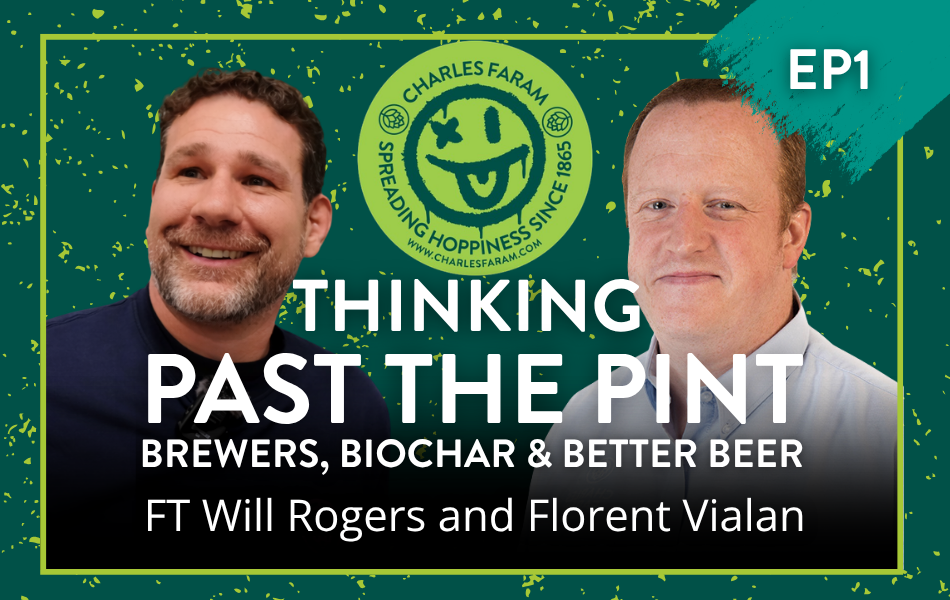
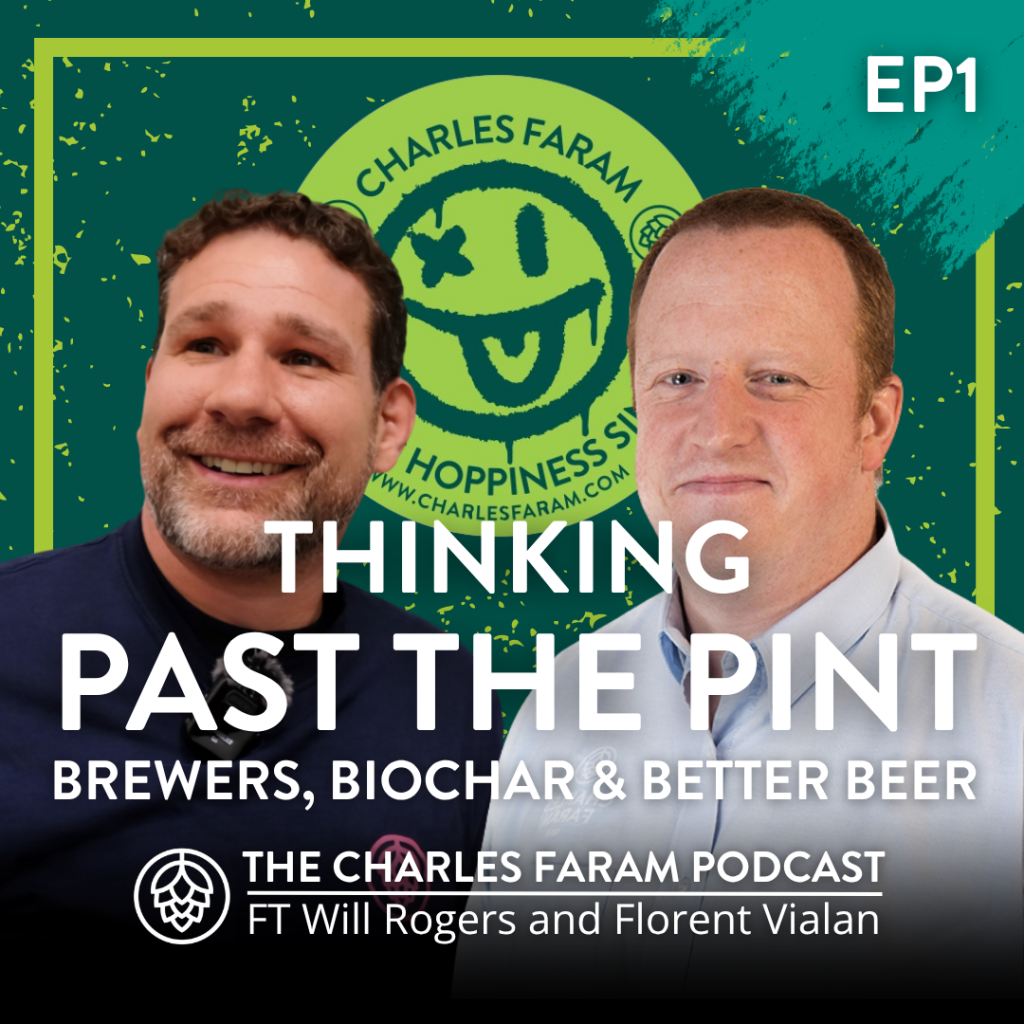
We have Flo Vialan our new Market Development Manager with 25 years of brewing experience, taking on Will Rogers, quizzing him about biochar, soil health and the future of hop growing, giving you that brewers perspective! From ancient Amazonian ‘black earth’ to modern lab technology, they explore how sustainability, smarter water use and advanced hop analysis could shape the next generation of British hops and the beers brewed with them.
We also head to Rude Giant Beer in Salisbury for our Five Minute segment, chatting with Henry about award-winning lagers, community pubs and what’s next for the brewery.
Season 3 starts here!
FIVE MINUTES WITH FARAM
Five Minutes With Rude Giant – Henry
Paddie: Hello everyone, welcome to our Five Minutes with Faram segment. I’m back at Rude Giant Brewery, the first brewery I ever interviewed back in 2024 at our Bristol AromaFest®. Two years ago I was chatting with Lyle and today it is brewer Henry
Henry, can you introduce yourself and tell us about the brewery?
Henry: Hello, I’m Henry from Rude Giant Brewery. We’re coming up to three years old. Since then, we’ve brewed a wide range of beers, from lagers through to traditional bitters and recently we won Gold for Best Premium Pilsner at the SIBA National Awards!
What is your favourite hop?
Henry: I don’t have one standout hop, but I grew up in Kent and later realised the farm we used to visit grew Goldings, and stuck with me ever since.
What is your favourite beer?
Henry: It depends on the time of year. I’ve always been a bitter drinker, but since starting the brewery and brewing lagers, I’ve really grown to love traditional pilsners, especially after visiting Prague.
What is your favourite beer and food pairing?
Henry: Beer and cheese works really well. We did a beer and cheese night at a local pub where we paired each of our beers with different cheeses. One standout was our stout paired with a cheese, it was a great contrast.
What is your favourite pub?
Henry: The Haunch of Venison in Salisbury is a great spot, especially if you can get into the small private bar area. I also like the Royal Oak in Great Wishford. It’s a proper community pub, no food, just great atmosphere and people. That community feel is what makes a pub special.
Back to the brewery now, what’s one item you can’t live without?
Henry: A floor squeegee. It sounds simple, but it’s essential for keeping everything clean.
What do you listen to when brewing? Podcasts, songs, or a particular album?
Henry: Lots of podcasts, mainly history and food-related ones. Music-wise, it varies from country to hip-hop, depending on my mood and the energy needed!
If you weren’t brewing, what would you be doing? Did you do anything before?
Henry: I’ve done a bit of everything, hospitality, hairdressing, fitting fireplaces, even selling cheese. I’d probably still be doing something creative. Brewing suits me because every day is different.
Is your beer range mostly core or specials?
Henry: Mostly core. We do an oat stout in winter and a seasonal festive bitter, but generally we stick to a solid core range with a few seasonal variations.
Who is your biggest brewing inspiration? Who got you into brewing?
Henry: Lyle got me into brewing, I started working with Lyle at another brewery before COVID. For my inspiration, I just love pubs and everything about beer as well as the community it creates.
Do you attend many beer festivals?
Henry: I used to go to the Salisbury Beer Festival regularly. We’ve also had our beer at a few festivals, including events in London.
Any hobbies outside the brewery?
Henry: I play guitar and write music. I’ve played for many years and love it! I mainly play solo not in a band.
What was the last beer you brewed?
Henry: Our Best Bitter, we brewed it yesterday with a great result!
What’s next for you and the brewery?
Henry: We’re focused on growing Rude Giant. Winning the SIBA award was a big moment for us. We’ve started bottling, built new relationships, and worked with St Austell for distribution. We’ve also sold beer at events like Thruxton Racecourse, so we’re looking to expand further and build on that momentum.
The conversation keeps flowing as Faram’s Paddie chats up with Henry from Rude Giant Brewery in Sailsbury! This was in fact the first-ever brewery Paddie interview in 2024. Back then, he chatted to Lyle, and now it is brewer Henry’s turn.
THIS BIOCHAR BENEFITS PODCAST IS ALSO AVAILABLE ON:
Would you rather read than watch or listen?
Check out the detailed summary below
Biochar Benefits, Brewing Innovation & the Future of Hop Production
Spreading Hoppiness is BACK for season 3! This week Faram’s Will Rogers and new Market Development Manager Flo, explore sustainability, innovation, and how evolving technology could shape the future of hop growing and brewing.
Biochar – An Ancient Tool for Modern Farming
The discussion begins with the biochar benefits, a carbon-rich material dating back to ancient Amazonian farming, a material created by heating organic matter at high temperatures in low-oxygen conditions, biochar has a porous structure that helps retain water, nutrients, and beneficial microbes. These qualities are perfect for improving soil health and microbial activity, research has started to indicate that biochar could help hops become more resilient to disease and environmental pressures. Trials are underway, with biochar being applied directly at planting, often pre-treated with nutrients and microorganisms to maximise its effectiveness.
Soil Health & Sustainable Growing
The chat continues to a comparison between wild hedgerow hops and cultivated varieties highlights the importance of biodiversity. Wild hops often show fewer signs of disease, and why is that you? It is likely due to richer, more balanced soil ecosystems living in the soils around them. So, how can we create these within cultivated hop yards?
Hop farming has traditionally relied on low-organic, “bare earth” systems where only hops would be grown within the yards with the fear that anything else would introduce disease. However, in recent years this has been proved wrong, with the use of cover cropping shown to improve soil structure and organic matter to naturally support plant health and long-term sustainability.
Now what about the brewhouse, how else can biochar be used?
Biochar’s potential extends beyond the hop yards. The pair explore its possible use in brewery wastewater treatment, where its filtration properties could help reduce waste solids and prevent harmful substances from entering our waste water systems.
Innovation, Climate & the Future
Climate change and water management are key concerns. While UK rainfall may remain stable overall, shifting patterns will require better storage and usage strategies. Alongside this, hop breeding programmes are already developing draught resistance varieties that are showing better returns in drier summers.
Advancements in hop analysis are also on the horizon. Technologies like near-infrared scanning could allow faster, more detailed testing, both in labs and the field, helping growers and brewers make more informed decisions and give a high level of detail in a faster manner.
A Collaborative Future
The episode highlights the importance of collaboration across the industry, from growers and brewers to researchers and suppliers. By combining traditional knowledge with modern science, the brewing sector is finding new ways to improve sustainability without compromising quality.
As the season begins, this conversation sets the tone: innovation, driven by collaboration, will be key to the future of brewing.
Key images from the beer quality podcast


“We’re trying to modify the microbiome in the soil to create a more positive environment for the plant to thrive.”
Will Roger, Group Technical Director, Charles Faram